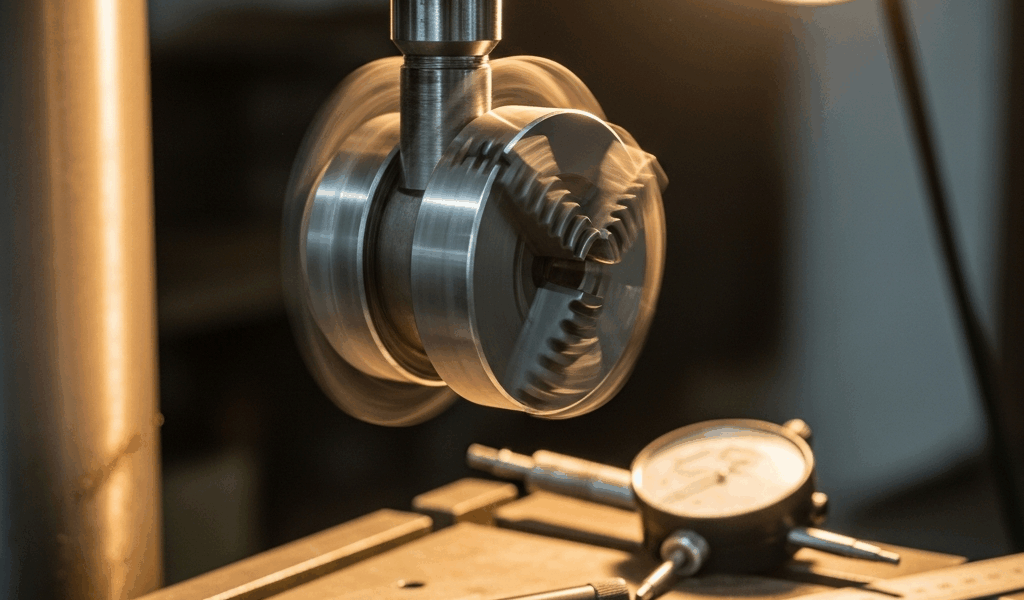
Why Your Drill Press Chuck Wobbles and What It Means
Your drill press chuck wobbles when spinning fast, and honestly, you’re ready to throw something. I get it — that’s the exact moment I found myself three years ago, standing in front of a benchtop drill press that suddenly felt like it had the accuracy of a carnival game. The frustration came from not knowing whether I needed a fifty-dollar fix or a five-hundred-dollar replacement.
Here’s what I discovered: wobble at speed usually traces back to one of three specific problems, and only one of them requires buying new equipment. The others? Fixable in your shop right now.
First, there’s chuck runout — basically the amount the chuck centerline drifts as it spins, measured in thousandths of an inch. Worn chuck jaws cause this. The gripping surfaces degrade, and bits no longer seat concentrically. Second is spindle runout, which lives upstream of the chuck. Your spindle itself might be bent or have worn bearings. Third is bearing play — excess lateral movement in the spindle assembly that gets amplified at higher speeds.
The wobble you’re seeing might be a single problem or a combination. But here’s what matters: a little runout is normal. A quarter-inch of visible wobble at the chuck nose? That’s fixable. An eighth-inch or less? You might live with it or address it depending on your work.
The mistake I made initially was assuming the chuck was destroyed. I nearly ordered a replacement before actually diagnosing anything. Probably should have opened with this section, honestly. A systematic test takes ten minutes and saves you from guessing.
The 10-Minute Runout Test You Can Do Right Now
You need two things for this test: something to measure with and the spindle running at speed. Ideal is a dial indicator clamped to the drill press table pointing at the chuck nose. If you don’t own a dial indicator — and let’s be honest, most home shops don’t — you have alternatives.
Let’s start with the dial indicator method since it’s the most reliable. Chuck a piece of round rod, half-inch steel works fine, into the chuck as tightly as you normally would. Clamp your dial indicator so the probe contacts the rod’s side at about mid-height on the chuck. Set the indicator to zero. Now spin the spindle slowly by hand or at low speed. Watch the needle. If it moves more than 0.010 inches, you’ve got measurable runout. If it moves more than 0.030 inches? That’s serious and probably explains your wobble.
No dial indicator? Use the pencil mark method — it’s surprisingly effective. Clamp a piece of round rod in the chuck. Use a Sharpie or pencil to make a thin line along the rod’s length while the spindle turns at medium speed. Check the mark when you stop the spindle. A consistent, unbroken line means runout under 0.005 inches, which is acceptable. A dashed or wandering line? Runout’s definitely present.
Next, isolate where the problem lives. Chuck an accuracy sleeve — a tight-tolerance cylindrical piece, roughly one inch diameter, 1.5 inches long — into the chuck instead of the rod. Repeat the dial indicator test. If runout improves significantly, the problem is your chuck. If it stays the same? Suspect the spindle.
Now test spindle bearings for play. Stop the spindle and grab the chuck by hand — gently. Move it side to side. You should feel nearly nothing. Any noticeable movement means bearing wear. Listen, too. Spin the spindle with no load at moderate speed. A grinding sound or anything other than a smooth whir suggests bearing deterioration.
So what do your results mean? Under 0.005 inches runout: your setup is fine. Between 0.005 and 0.015 inches: acceptable for general woodworking, especially if you’re not doing precision metalwork. Above 0.015 inches: time to troubleshoot further or accept limitations. If bearing play is obvious and runout is high, the spindle bearings are likely your culprit.
Quick Fixes That Actually Work Before You Buy New
Start here, even if your diagnosis points elsewhere. These cost nothing and work surprisingly often.
Clean the spindle taper. The spindle taper and chuck’s mating surface accumulate dust, old grease, and metal chips. This prevents proper seating. Remove the chuck from the spindle. Use a clean rag and rubbing alcohol to wipe both surfaces. Pay attention to the spindle’s internal taper — use a folded rag on the end of a stick. Reinstall the chuck snug, not gorilla-tight, and test. I’ve seen this alone reduce runout by half.
Tighten the chuck collar properly. Many people don’t know there’s a draw-bar or collar you can tighten to pull the chuck onto the spindle taper more securely. Check your drill press manual for the exact procedure — some models have a wrench-turn draw-bar underneath the table. Tighten firmly but don’t strip threads. Retest runout.
Check jaw alignment and wear. Open the chuck fully. Look at where the jaws close against the chuck body. They should align with the body’s edge. Misaligned jaws — one sticking out further — indicate wear or damage. If one jaw looks bad, all three may be similarly worn. This is fixable only by replacing the chuck or jaw set, if your model supports that.
Verify bit seating. The bits you’re using matter. Bent shanks or worn flutes cause vibration independent of chuck condition. Use a straight, quality bit. Insert it fully and tighten evenly. Some chucks grip better with the bit seated deeper.
The taper cleaning and collar tightening should happen first. Do those. Retest. If runout improves, you’ve likely found your answer. If wobble persists at speed, move forward to replacement considerations.
When the Chuck Really Is Shot and What to Replace It With
After testing, if runout remains high and bearing play isn’t the issue, your chuck needs replacing. Don’t panic about cost — you have real options.
Jacobs chucks are the gold standard. A Jacobs 13N, tapered with 1/2-inch capacity, runs about $80–120 depending on where you buy. They hold tolerance well, last decades, and feel solid. If you’re drilling occasionally and precision matters sometimes, this is worth the money.
Albrecht chucks are German-made and excellent, though harder to find in the US. Expect $100–150. They’re overkill for hobby woodworking but exceptional if you keep your drill press for twenty years.
Generic chucks — PowerTex, Wen, Dewalt replacements — start at $25–50. I tested a Wen model on my benchtop press. The runout was reasonable, under 0.010 inches, and it held bits securely. Not beautiful. Not a name brand. But functional and cheap. If your drill press was fifty dollars, spending thirty on a replacement chuck makes sense.
Before you buy, check your spindle’s taper size. Most benchtop models use 1/2-inch Jacobs taper. Larger drill presses might use 3MT or larger. Match the taper or the chuck won’t fit.
One reality though: if bearing play is your actual problem — you felt movement and heard grinding — replacing the chuck won’t solve the wobble. You’ll need spindle bearing service, which usually means a professional repair or rebuilding the spindle assembly. That’s beyond DIY for most woodworkers and probably warrants replacing the entire drill press if it’s old.
How to Avoid This Problem in the Future
Maintenance prevents most chuck wobble from developing in the first place. These aren’t hard habits.
Clean the spindle taper quarterly. Dust accumulates even in a closed shop. A quick wipe with a rag takes two minutes and keeps the chuck seating cleanly. Store collets and chucks with protective caps or covers. Keep moisture away from the spindle area — rust inside the taper degrades the fit.
Don’t force bits into the chuck. If a bit doesn’t fit smoothly, the shank is either bent or the jaws are dirty. Tap bits into place gently. Forcing them can damage jaw engagement surfaces permanently.
Use proper bit sizes for your chuck’s capacity. A chuck rated for 1/2-inch bits can hold a 1/8-inch bit, but it’s gripping unevenly. Runout increases. When possible, use bits that fill most of the jaw range.
Check runout annually on your primary drilling bits, especially if you use the drill press for precision work. A quick dial indicator check tells you when bearings are starting to wear before wobble becomes obvious.
Don’t let your drill press sit idle for months with a chuck mounted and grease hardening inside. If you’re storing the machine, remove the chuck or exercise the spindle monthly at low speed to keep bearing lubrication distributed.
The wobble you’re experiencing right now isn’t necessarily the beginning of the end. It’s feedback telling you something needs attention. Run the diagnostics, make the two-minute fixes, and you’ll either have clarity about what’s actually broken or confirmation that your machine just needed cleaning. Either way, you’ll be spinning bits again with confidence.


Stay in the loop
Get the latest the home woodshop updates delivered to your inbox.