

A wood workshop is defined by its tools — the particular combination of machines and hand tools that determines what you can make and how you can make it. Understanding what each tool category contributes to the process is the foundation of building a shop that actually works. As someone who has used the full range of woodworking tools across different shop settings, I learned what each category does and where the real capability lies. Today, I will share it all with you.
But what defines a well-tooled wood workshop? In essence, it’s having the right combination of tools to dimension raw material, make accurate joints, assemble structures, and surface parts to finished quality. But it’s much more than a list of equipment — it’s understanding how the tools work together as a system where each one builds on what the others enable.
Saws: The Dimensional Foundation
The table saw is the machine around which most woodworking shops organize their capabilities. Its central function — ripping boards to accurate width and crosscutting to length with a miter gauge or sled — is fundamental to almost every project. The table saw is also the machine for cutting dadoes and grooves (with a dado stack), tapers (with a tapering jig), and sheet goods (with featherboards and a quality fence).
The bandsaw addresses what the table saw can’t: curves, resawing (ripping boards parallel to the face to produce thinner stock or veneers), and cutting shapes. A well-tuned bandsaw is also excellent for rough dimensioning before jointing and planing — safer than a table saw for irregular stock.
The miter saw handles repetitive crosscutting — parts to length, angle cuts for frames and trim — faster and more conveniently than setting up a table saw sled. A 10″ compound sliding miter saw covers almost all crosscutting needs in a woodworking shop.
The jigsaw is the portable solution for curves and shapes, particularly in sheet goods and for site work. Every shop needs one for the situations where other saws can’t reach.
Chisels: The Joinery Hand Tool
Chisels are indispensable for fitting joints, cleaning up machine-cut mortises and dadoes, chopping waste from dovetails, and trimming components to precise fit. A set of four chisels in 1/4″, 1/2″, 3/4″, and 1″ covers the majority of woodworking tasks.
Sharp chisels are completely different tools from dull ones. A properly sharpened chisel pares wood cleanly with control; a dull chisel requires force and deflects unpredictably. Learning to sharpen chisels is as important as learning to use them.
Planes: Shaping and Surface Finishing
Bench planes (the #4 and #5 are the most useful sizes) smooth surfaces, trim joints to perfect fit, and do fitting work that’s impractical at a machine. Block planes handle end grain and small trimming tasks. Once you develop the skill to use a sharp hand plane effectively, you reach for it constantly — it’s faster and more precise than sanding for many operations.
Specialized planes — router planes for cleaning up dadoes and grooves, shoulder planes for trimming tenon cheeks, rabbet planes for fitting rabbets — extend the capability into joinery fitting that machine tools can’t address as precisely.
Routers: The Most Versatile Power Tool
A router handles edge profiles, dados, grooves, mortises, template pattern routing, sign carving, and joinery work (with appropriate jigs). A plunge router handles mortising and operations that require entering the cut in the middle of a surface. A router table adds a fixed, fence-guided setup that dramatically expands router capability for edge work and joinery.
The router is the single power tool with the broadest range of applications — more than the drill, more than the sander, and arguably more than any machine except the table saw.
Drills: Boring and Fastening
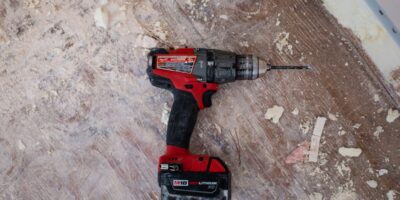
A cordless drill/driver handles pilot holes, fastener driving, and general-purpose drilling. The drill press adds perpendicular boring accuracy that a handheld drill can’t achieve — critical for mortise drilling, hinge hardware, and joinery work where hole angle matters.
Sanders: Surface Preparation
A random-orbit sander is the primary power sanding tool for woodworking — it removes material faster than hand sanding while leaving a random scratch pattern that’s less visible in the final finish than the directional pattern of belt or orbital sanders. Belt sanders remove material very aggressively — useful for rough dimensioning work but easy to over-sand. An edge sander or oscillating spindle sander adds capability for curves and shaped surfaces.
Measuring and Marking: Where Accuracy Starts
A combination square verified for accuracy, a marking gauge, and a marking knife give you the layout precision that makes woodworking at a fitting tolerance possible. These tools are simple, inexpensive, and used on every single project. Buy quality here — a combination square that isn’t actually square is worse than useless.


Leave a Reply