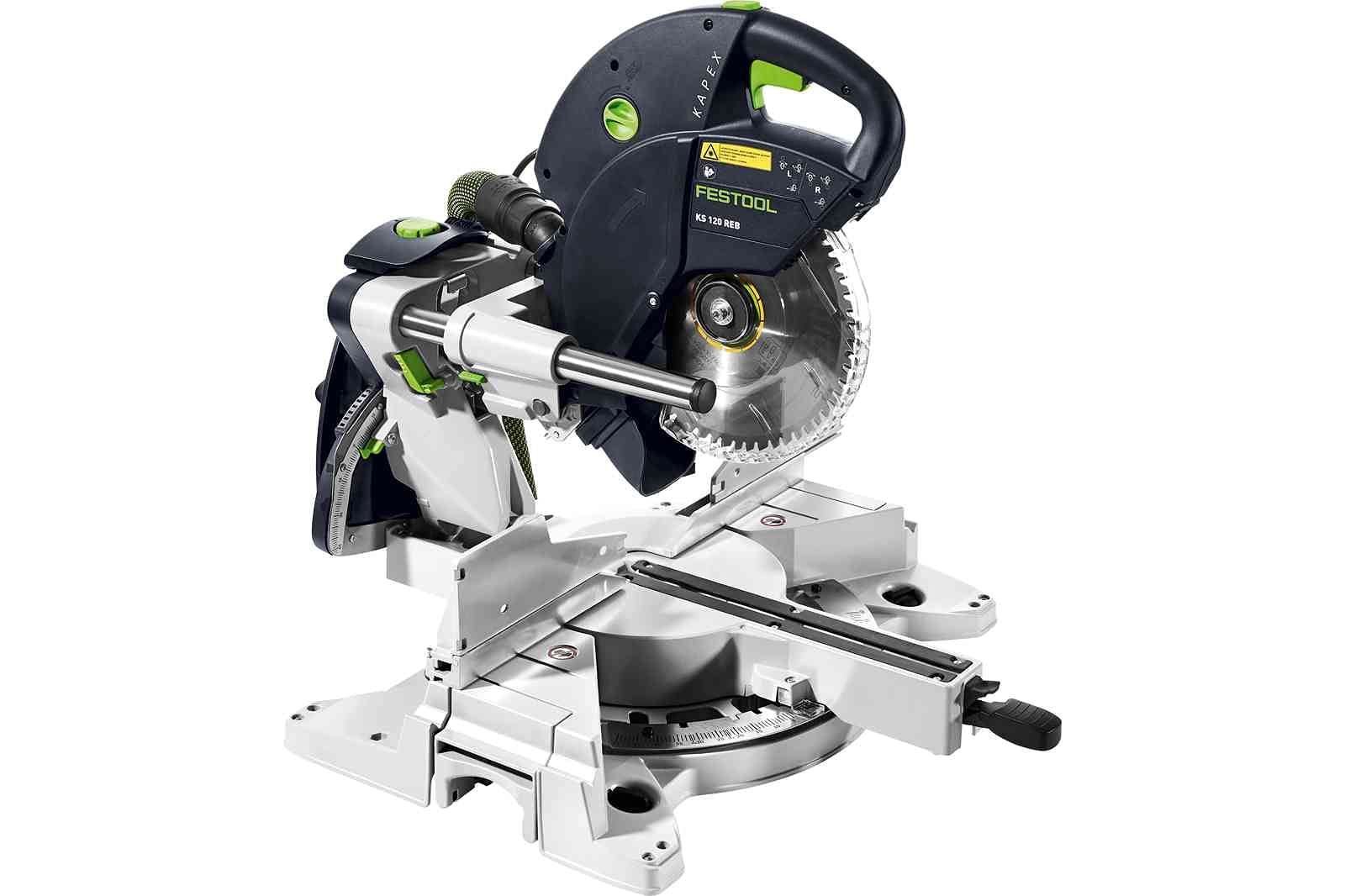
Festool sanders have gotten a complicated reputation — beloved by professionals who use them daily, viewed skeptically by hobbyists who look at the price and wonder if it’s justified. As someone who resisted Festool for years before finally buying a random-orbital sander and then gradually adding others, I want to give you a grounded assessment: what the premium actually buys, where it’s justified, and where it’s not.

Why Festool Sanders Are Expensive
The price difference between a Festool random-orbital sander and a comparable Bosch or Makita is real and significant. Understanding where that money goes — rather than just assuming “brand premium” — helps you decide whether it’s relevant to your work.
The primary engineering difference is in the sanding pad and the counterweight system. Festool uses a different pad weight and orbital geometry than competitors, designed to produce minimal swirl marks at higher removal rates. The pad bearing is precision-engineered to run at lower vibration than comparable machines. Over the course of a day’s sanding, this difference in vibration is measurable in fatigue — it’s one of the reasons professional finishers with hand vibration concerns pay the Festool premium.
The second significant difference is the dust extraction integration. Festool designed their dust collection ecosystem as a system: the extractor, the tool, and the hose are engineered to work together with automatic tool start/stop (the extractor turns on when the tool does), efficient flow rates matched to the tool’s port geometry, and fine filtration that captures particles down to the size range associated with health risk. The result is genuinely superior dust capture compared to connecting a competitor’s sander to a general shop vac — the physics are different.
Third is the build quality. Festool sanders are not assembled to a price point. The housing is high-grade polymer that doesn’t crack under sustained use. The pad attaches to precision-machined threads. The speed control is smooth and calibrated rather than approximate. None of this matters until you’re comparing a three-year-old Festool to a three-year-old budget sander — at that point, the difference in service history and current condition is usually significant.
The ETS 125 and ETS EC 125: The Core Random-Orbital Sanders
The ETS 125 is the standard Festool random-orbital and the one most woodworkers should consider first. It uses a 125mm (5-inch) pad — the standard size for most furniture and cabinetry sanding. The ETS EC 125 is an updated version with an electronically-controlled motor that maintains consistent speed under varying loads; when sanding pressure increases, the motor compensates to maintain the set orbital speed rather than bogging down. This consistency shows up in more even scratch patterns across a surface, which matters for finish work.
For flat panel work, the RTSC 400 is worth knowing about: it’s a quarter-sheet finish sander that produces extremely fine finishes on flat surfaces. The pad motion is purely orbital (not random-orbital), which produces finer scratch patterns at the cost of slower material removal. It’s the right tool for final sanding before finish application on flat furniture surfaces.
Belt Sanders: The FS-LINEAR 350 and 500
Festool’s belt sanders are the tools to know when you need aggressive material removal in a handheld format — leveling large glued-up panels, removing old finish from tabletops, preliminary shaping of solid wood surfaces. The FS-Linear system allows the belt sander to run on a track (the same Festool guide rail system used with the track saw), which produces a guided, parallel action that can remove material from a large surface more evenly than freehand belt sanding.
This guided belt sanding application is genuinely unique in the sander market and is valued by furniture restorers and production shops for the consistency it provides on large flat surfaces.
Where the Investment Makes Sense
Professional or semi-professional use where the sander runs for hours daily — the ergonomic and durability advantages compound with use time. Fine furniture finishing where swirl marks, dust contamination, and surface consistency directly determine the quality of the finished piece. Shops that are already invested in the Festool CT dust extractor system, where the integration benefits are fully realized.
Where it may not make sense: hobbyists who sand occasionally, applications where material removal rather than surface quality is the goal, and projects where the work environment means the dust extraction system can’t be used effectively anyway.
Getting Value from the Investment
Buy the appropriate abrasive. Festool Granat abrasive pads are engineered for their sanders’ specific orbital geometry and clog resistance. Using third-party pads that don’t match the hook-and-loop interface or the abrasive characteristics produces worse results from the same machine. The abrasive is part of the system.
Service the machine periodically. Festool has authorized service centers in most regions, and the modular design of their tools means the pad bearing and motor components can be replaced at reasonable cost rather than requiring whole-tool replacement when a component fails.
Recommended Woodworking Tools
HURRICANE 4-Piece Wood Chisel Set – $13.99
CR-V steel beveled edge blades for precision carving.
GREBSTK 4-Piece Wood Chisel Set – $13.98
Sharp bevel edge bench chisels for woodworking.
As an Amazon Associate, we earn from qualifying purchases.



Stay in the loop
Get the latest wildlife research and conservation news delivered to your inbox.