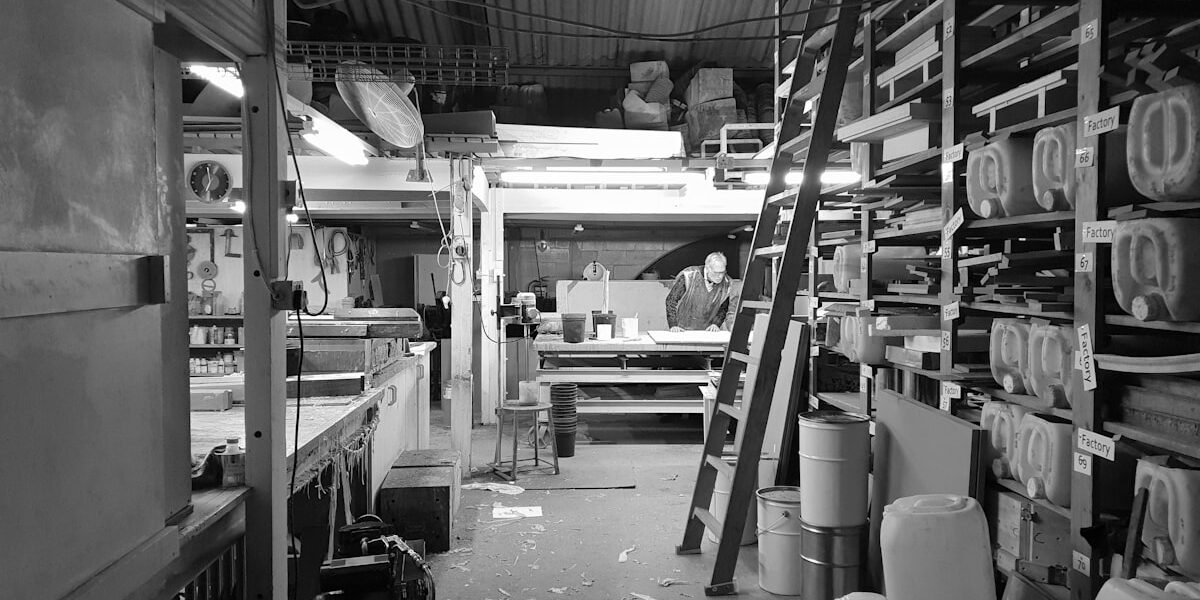

A well-designed wood workshop is one of the most satisfying spaces a craftsman can build. I know this from experience — I’ve worked in inadequate shops and I’ve worked in well-planned ones, and the difference in daily satisfaction and productivity is significant. The good news is that a functional wood workshop doesn’t require a massive space or an unlimited budget. It requires thoughtful organization and the right core equipment. Today, I’ll walk you through what makes a wood workshop actually work.
The Essential Tool Core
Every wood workshop revolves around a set of core machines and hand tools. The stationary machines that form the backbone of most shops: a table saw for ripping and crosscutting, a miter saw for repetitive crosscutting, a jointer and planer for flattening and dimensioning rough lumber, a bandsaw for curves and resawing, and a drill press for accurate perpendicular drilling.
Not every shop has all of these — a beginning shop might have just a table saw, miter saw, and workbench, filling in with hand tools for everything else. That’s fine. The core is a starting point, not a requirement. Add machines as projects demand them and budget allows.
Hand tools deserve equal consideration alongside power tools. A set of sharp chisels, a quality hand plane, a marking gauge, combination square, and sharp handsaws fill in the gaps that machines can’t reach — fitting joints, trimming to final dimension, and detail work that would be impractical to set up a machine for.
The Workbench: Center of Everything
The workbench is arguably the most important fixture in the shop. It needs to be rigid — any flex or racking transfers into your work. It needs to be flat — a warped top makes accurate work impossible. It needs to be at the right height for your body, which is typically around 34-36″ for most people but varies.
Traditional workbenches feature a front vise for holding boards edge-up, bench dogs in holes along the top surface, and often a wagon vise or tail vise at the far end for clamping workpieces flat on the surface. All of these features serve specific functions and are worth having on a serious bench.
Build or buy the best workbench you can. It’s a long-term fixture that outlasts many of the tools used on it. I’ve seen working woodworkers still using their grandfather’s bench. They don’t say the same thing about their grandfather’s table saw.
Safety Infrastructure
Dust collection is a safety issue, not just a cleanliness preference. Wood dust — especially from MDF, hardwoods, and finishing sanding — is a respiratory hazard with repeated exposure. A dedicated dust collector sized for your machines (1.5 HP minimum for most single-machine use, more for simultaneous connections) makes a tangible difference in shop air quality.
An air filtration unit — a ceiling-mounted unit that cycles shop air through progressively finer filters — addresses the fine dust that escapes even good point-of-source collection. In a regularly used shop, this is worth the investment.
Eye protection at every machine. Hearing protection for any machine use beyond a few minutes. These aren’t optional and shouldn’t feel like optional habits.
Lighting and Ventilation
Adequate lighting eliminates a surprising number of errors. Working in a dimly lit shop means misreading measurements, missing layout lines, and misjudging cut positions. LED shop lights are inexpensive and dramatically better than older fluorescent fixtures for both brightness and color rendering.
Illuminate every major machine workstation. The saw fence, the miter saw fence, the workbench surface — all of these need direct light, not just general overhead ambient light. If you can see a shadow under your workpiece when you’re checking it for flatness, your lighting isn’t adequate at that station.
Ventilation matters most during finishing operations — spray lacquer, oil finishes, and even water-based finishes off-gas solvents that accumulate in an unventilated space. Arrange for cross-ventilation or mechanical exhaust when finishing. A fan moving air through the space is the minimum.
Storage That Works
A shop without adequate storage becomes cluttered within weeks and stays that way permanently. Clutter causes wasted time looking for tools, safety hazards when you’re working around piles of stuff, and the general low-grade frustration of a space that doesn’t work the way it should.
Pegboard for frequently used hand tools near the workbench. Shelving units for supplies, hardware, and accessories. A lumber rack — vertical storage keeps boards straighter and accessible without moving everything on top. Drawers for small items (drill bits, router bits, hardware) with some organizational system inside the drawers.
The principle is simple: everything in the shop has a place, and things return to their places. It takes discipline to maintain and it’s worth every bit of it.
Making the Space Your Own
The functional requirements are real, but beyond them a workshop reflects the person who works in it. A radio or speaker system makes long sessions more enjoyable. Artwork or inspiration on the walls. A small whiteboard for sketching ideas or tracking a project’s cut list. A stool or chair for sitting during hand tool work.
A workshop you enjoy spending time in produces more and better work than a workshop you tolerate. Get the fundamentals right, then make it yours.


Leave a Reply