The best tool brand for woodworking is not one universal winner. DeWalt and Makita are strong all-around cordless choices; Milwaukee offers a deep trade-oriented cordless platform; Bosch is compelling for routers, jigsaws, measuring tools, and its 18V system; Festool specializes in precision and integrated dust extraction; SawStop is the table-saw safety specialist; RIDGID can offer strong ownership value when its registration terms fit; and Ryobi is a practical platform for budget-conscious home shops.
The right decision depends on the tool category, the work you do, available local service, and—especially for cordless tools—the batteries you already own. Woodworkers usually get a better shop by choosing a primary battery platform and then buying the best stationary or specialty tool for each job, even when the logos do not match.
Best tool brands for woodworking at a glance
| Brand | Best fit | Why it stands out | Check before buying |
|---|---|---|---|
| DeWalt | Broad cordless woodworking and mixed jobsite use | Large 20V MAX ecosystem plus FLEXVOLT options | Exact battery and tool compatibility |
| Makita | Woodworkers wanting a broad 18V platform | Large LXT range, including compact options | Whether LXT or XGT better covers future tools |
| Milwaukee | Trade work plus a cordless shop | Deep M12 and M18 ecosystem | Whether woodworking-specific tools meet your dust and precision needs |
| Bosch | Routers, jigsaws, measuring, and balanced 18V tools | Strong specialty tools and CORE18V platform | Local availability and the exact platform badge |
| Festool | Fine furniture, cabinetry, and finish work | System-based precision, extraction, and storage | Total system cost, not just the bare tool |
| SawStop | Table saw buyers prioritizing injury mitigation | Skin-contact detection and braking system | Model, power, space, cartridges, blades, and dust setup |
| RIDGID | Value-focused ownership and shop tools | 18V platform and conditional Lifetime Service Agreement | Eligibility, retailer, receipt, and registration deadline |
| Ryobi | Home shops and wide capability on a budget | Long-running ONE+ battery compatibility and broad range | Precision and duty cycle of the specific tool |
How we evaluate a woodworking tool brand
A brand name does not make every tool in its catalog equally good. Evaluate the exact model against the operation it must perform. For woodworking, the most useful criteria are:
- Accuracy and adjustment: fences, bases, depth stops, bevels, and collets should hold their settings.
- Cut or finish quality: power matters, but runout, vibration, blade support, and pad motion directly affect the workpiece.
- Dust control: port geometry and guard design can matter as much as the vacuum attached to them.
- Ergonomics: grip shape, balance, switch placement, vibration, and weight become important during long sessions.
- Serviceability: check parts diagrams, repair channels, warranty terms, consumables, and nearby service before a breakdown.
- Platform fit: a cordless tool is also a commitment to batteries and chargers.
- Total cost: include batteries, chargers, rails, blades, hoses, adapters, storage, and required accessories.
Do not infer quality from voltage or price alone. Compare the tool under the same blade, bit, abrasive, stock, and extraction conditions whenever possible.
DeWalt: best broad all-around cordless choice
DeWalt makes sense for a shop that needs drills, drivers, circular saws, jigsaws, routers, sanders, nailers, and jobsite equipment on a widely available platform. The manufacturer currently describes more than 300 products in its 20V MAX system. FLEXVOLT batteries can support compatible higher-draw tools while also working with compatible 20V MAX equipment.
That breadth is valuable when a woodworker also handles installation, remodeling, or outdoor work. It does not mean every DeWalt model is the best in its class. Compare the specific router’s collet and base, a saw’s alignment and dust capture, and the battery required for full performance. Also note DeWalt’s disclosure that “20V MAX” describes maximum initial voltage; nominal voltage is 18 volts.
Choose DeWalt if: you want one broadly stocked platform for woodworking and construction, already own compatible batteries, or need FLEXVOLT tools for higher-demand portable work.
Makita: best broad 18V platform for a woodworking-focused shop
Makita’s 18V LXT system covers compact drills through saws, routers, sanders, and dust equipment. Makita currently lists more than 350 compatible products on its LXT platform page, with one- and two-battery 18V/36V configurations. That depth lets a shop standardize batteries without limiting itself to only basic handheld tools.
Makita also sells the higher-voltage XGT system. LXT and XGT are different battery platforms, so do not assume the packs interchange. Make a list of the five cordless tools you are most likely to buy next and compare both catalogs before committing. A platform with a perfect drill but no suitable future saw or dust solution becomes expensive to change.
Choose Makita if: you value a very broad 18V catalog, want compact tool options, or already own LXT batteries and the woodworking models you need are available on that platform.
Milwaukee: best for tradespeople who also woodwork
Milwaukee’s M12 and M18 systems are particularly attractive to electricians, plumbers, remodelers, and installers whose tools also serve in the woodshop. The platform includes drills, fastening tools, saws, routers, sanders, lighting, storage, and trade-specific equipment. For a mixed-use business, avoiding a second battery platform may matter more than a small advantage in one tool.
For dedicated furniture work, judge Milwaukee model by model. Verify router runout, saw adjustment, sanding vibration, and dust capture rather than assuming jobsite durability guarantees surface quality. The distinct article on Milwaukee, Festool, and SawStop for woodworking explains why those brands serve different parts of a shop rather than competing as interchangeable ecosystems.
Choose Milwaukee if: you already use M12 or M18 professionally, need a deep trade catalog, or prioritize cordless mobility across jobsite and shop.
Bosch: best balanced specialty-tool option
Bosch deserves consideration for routers, jigsaws, measuring tools, sanders, and 18V equipment. Its CORE18V documentation describes battery heat-management and charging options, while Bosch states its 18V chargers are compatible with Bosch 18V lithium-ion batteries. Product and regional availability still vary, so verify the specific tool, battery, and charger rather than relying on the brand name alone.
Bosch is especially useful for woodworkers willing to mix brands. A corded router or jigsaw does not lock the shop into another battery family, and the best model for that operation can be chosen independently.
Choose Bosch if: a particular router, jigsaw, laser, or measuring tool fits your work, or its 18V lineup covers your cordless plan at local dealers.
Festool: best precision and dust-extraction system
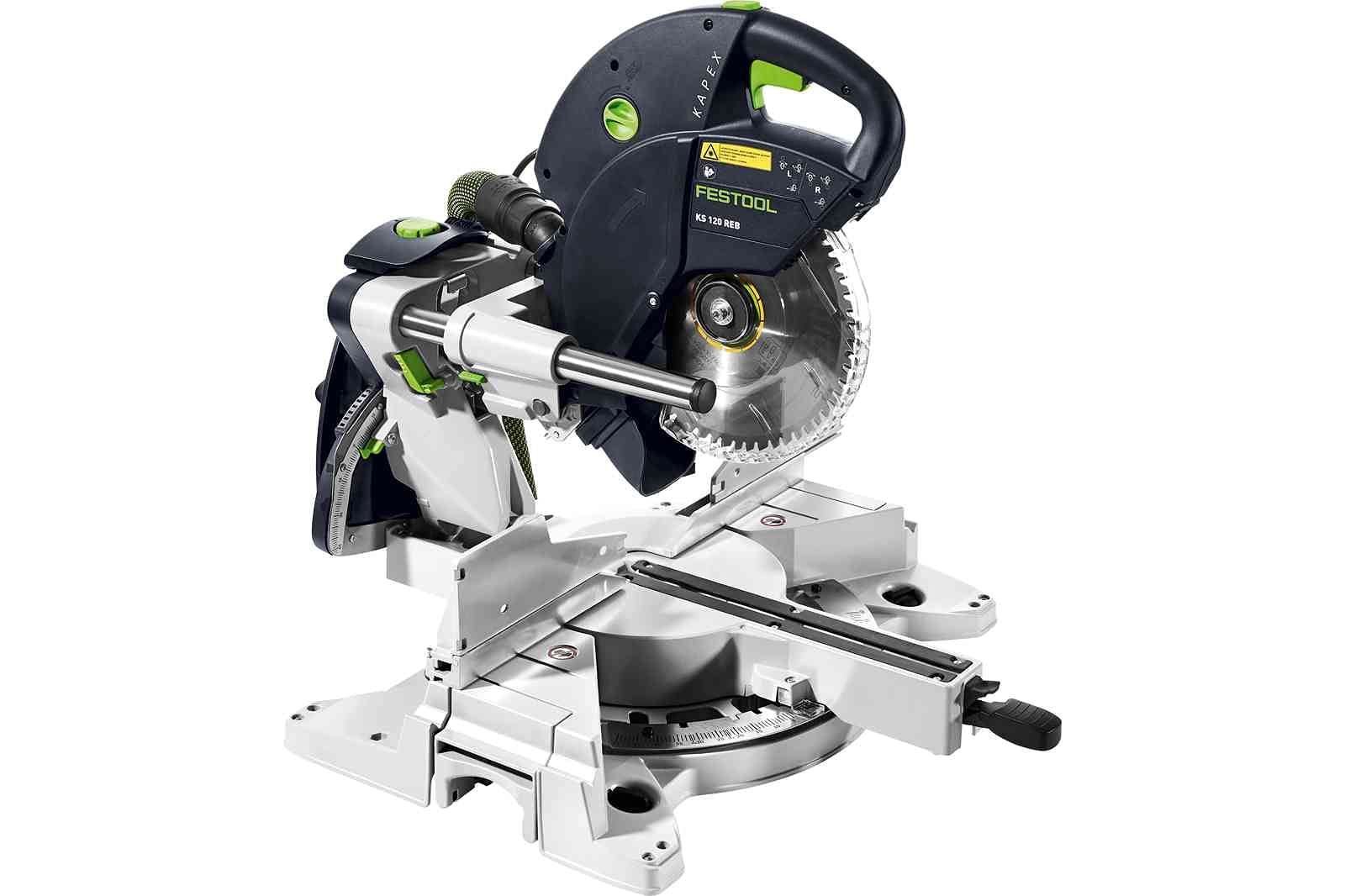
Festool approaches tools as an integrated system: saws and sanders connect to dust extractors, tools and accessories use modular storage, and guide rails support compatible operations. This can reduce setup friction in cabinetry, finish carpentry, and furniture work where dust control and repeatability directly affect results.
The important comparison is the total workflow cost. Price the tool, extractor, hose, adapters, rail, clamps, abrasives, and storage needed for the intended operation. The system can be valuable for daily professional use but excessive for an occasional project. A premium sander also cannot compensate for poor abrasive progression or an overloaded dust bag.
Choose Festool if: fine finishing, portable precision, and source extraction are daily priorities and the complete system saves enough rework or labor to justify its cost.
SawStop: best table-saw safety specialist
SawStop is not a general cordless brand. It specializes in table saws whose safety system detects contact with skin and rapidly stops and retracts the blade. The company’s safety explanation describes the mechanism, while its warranty language correctly warns that the system minimizes injury severity rather than preventing all injuries.
A SawStop still requires a blade guard, riving knife, push devices, correct stance, and safe technique. Certain conductive materials can require special handling, and a brake activation requires a replacement cartridge and inspection of the blade. Compare the complete saw—fence, power, capacity, dust collection, footprint, and service—not only the brake.
Choose SawStop if: you are buying a table saw and its injury-mitigation system is a priority for your home, commercial, shared, or educational shop.
RIDGID: best conditional long-term ownership value
RIDGID offers 18V handheld tools plus selected stationary equipment. Its most distinctive ownership feature is the Lifetime Service Agreement, but that program is conditional—not an automatic lifetime warranty on every purchase. RIDGID’s current LSA terms require an eligible product, purchase from an authorized qualifying retailer, proof of purchase, and registration within 90 days. Coverage is for the original registered owner and has exclusions.
Read and save the current terms before buying, keep the receipt, and confirm registration approval. If those conditions fit, the program can materially affect long-term cost. If they do not, compare the ordinary warranty and repair experience like any other brand.
Choose RIDGID if: a specific tool performs well for your needs and you are willing to complete and retain the documentation required for eligible service coverage.
Ryobi: best budget platform for home woodshops
Ryobi’s 18V ONE+ platform is designed around broad compatibility and accessible pricing. The company says the battery interface has remained compatible across products from the last three decades; its current ONE+ catalog spans shop, home, and outdoor tools.
That makes Ryobi practical when capability breadth matters more than production duty cycle. It can be a sensible home-shop platform for drilling, fastening, lighting, and occasional cutting. For a router, sander, or precision saw that directly controls finish quality, compare runout, vibration, adjustment, and extraction against the next price tier before deciding.
Choose Ryobi if: you need many occasional-use tools on one affordable battery system and can upgrade only the precision-critical tools separately.
Should every tool in your shop use one brand?
No. Standardize where compatibility saves money and mix brands where performance matters more.
- Standardize cordless batteries: drills, drivers, lights, portable saws, and nailers benefit from shared packs and chargers.
- Mix corded tools freely: routers, sanders, miter saws, and dust extractors do not need a shared battery.
- Choose stationary machines individually: table saw, band saw, jointer, planer, and drill press should match space, power, capacity, accuracy, service, and safety requirements.
- Do not force specialty tools into the primary platform: a unique joinery, extraction, or safety capability may justify another brand.
A five-step buying method
- Define the operation. Write down stock dimensions, material, accuracy, finish, portability, and duty cycle.
- List the complete setup. Include battery, charger, blade or bit, guide, dust adapter, storage, and safety equipment.
- Check compatibility in the manual. Marketing-family names are not enough; verify exact model numbers.
- Inspect service before purchase. Find the parts diagram, warranty, registration deadline, and repair route.
- Test safely during the return window. Check alignment, runout, vibration, controls, dust capture, and whether the tool holds adjustment. Follow the manual and disconnect power before inspection or adjustment.
Frequently asked questions
What is the best power-tool brand for woodworking beginners?
DeWalt, Makita, Milwaukee, Bosch, and Ryobi can all be reasonable depending on budget and the local catalog. Begin with the platform that has suitable versions of the next several tools you expect to buy. Do not choose based only on a discounted drill kit.
Is Festool worth the price for a hobbyist?
It can be if dust extraction, low-vibration sanding, portable precision, or a specific tool solves a recurring problem. For occasional work, a well-adjusted midrange tool with a good blade, bit, or abrasive often provides better value.
Which tool brands do professional woodworkers use?
Professional shops commonly mix brands. A shop may use one cordless ecosystem, a SawStop table saw, a Festool or another extraction setup, and stationary machines from different manufacturers. Workflow, uptime, parts, and results matter more than matching colors.
Should I switch battery platforms?
Switch when the existing platform repeatedly lacks tools or performance your work requires and the benefit exceeds the cost of new batteries and chargers. One weak tool is usually a reason to mix brands, not replace an entire functioning platform.
Bottom line: for most woodworkers, DeWalt or Makita is a strong primary cordless starting point, Milwaukee is excellent for a trade-and-shop crossover, Bosch is valuable for specific precision tools, Festool is the integrated premium workflow, SawStop is the table-saw safety specialist, RIDGID can offer conditional ownership value, and Ryobi stretches a home-shop budget. Buy the platform deliberately, then judge every important tool on its own merits.


Stay in the loop
Get the latest the home woodshop updates delivered to your inbox.