Building your own solid wood floating shelves is one of the most rewarding short-form woodworking projects available — the result is genuinely superior to anything you can buy at a reasonable price, the skills involved are foundational and transferable, and the finished shelves will outlast any piece of flat-pack furniture by decades. As someone who has built floating shelves in walnut, white oak, maple, and pine for different rooms with different requirements, I want to walk you through the full build process from rough stock to installed shelf.

Designing the Shelf Before You Mill
Thickness, depth, and length are the three dimensions that determine a shelf’s visual weight and structural performance. For a floating shelf that will hold real loads — books, kitchen items, art objects — I recommend 1.5-inch finished thickness as the minimum in solid hardwood. Thinner than that and the shelf will visually appear to flex even if it doesn’t, and it actually will flex under concentrated loads. 1.75 to 2 inches reads as substantial and carries loads well.
Depth is typically dictated by use: kitchen shelves for dishes want 10-12 inches, bookshelves want 9-10 inches, display shelves can be as shallow as 5-6 inches. Don’t make shelves deeper than the use case requires — a deep shelf in a small room is visually heavy and physically awkward to reach the back of.
Length depends on what you’re mounting into. Spans beyond 36 inches in solid hardwood at 1.5-inch thickness will deflect noticeably under heavy loads. Keep shelves under 36 inches for heavy use, or increase thickness to 2 inches for longer spans. Design the length to hit wall studs at the mounting points — which often means the shelf length is dictated partly by the stud layout behind the wall.
Wood Selection and Milling
Start with lumber that is dry and stable. Green or partially dried stock will move after you build the shelf, causing warping or checking. For a floating shelf, flat-sawn stock in a single board is the simplest approach for narrower shelves. For shelves 8 inches and wider, laminating two boards with the grain oriented in opposite directions produces a more stable panel.
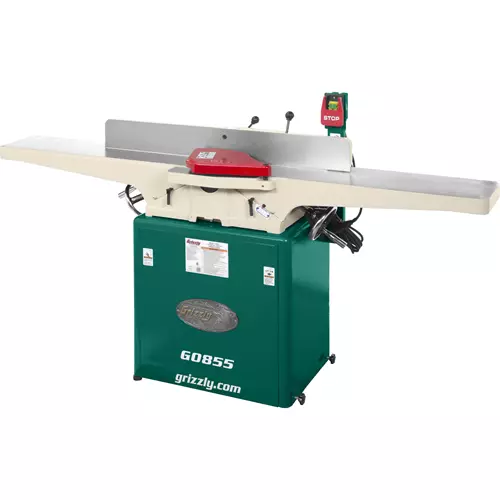
Mill the stock flat on the jointer, then to final thickness through the planer. For a 1.5-inch finished shelf, start with 8/4 (roughly 2-inch) stock to allow for milling to flat. A warped board that’s too thin to mill flat without going under your target thickness is a common source of trouble — buy slightly thicker stock than you think you need.
Cut to length after milling thickness and width. Cutting to final length first and then planing creates work holding challenges in the planer and can produce boards that are slightly different thicknesses at different points along the length.
Edge Treatment
The edge profile is a significant design decision. A simple round-over (1/4 inch radius is subtle; 1/2 inch is more pronounced) softens the shelf and reads as casual or Scandinavian in aesthetic. A chamfer on the bottom front edge only lightens the visual weight considerably while keeping the top arris crisp. A more complex profile — ogee, thumbnail, or cove — adds a traditional character appropriate for period-influenced interiors.
Rout the profile on the router table, taking multiple light passes rather than a single full-depth pass. This produces a cleaner profile with less tearout, especially on cross-grain ends. Route the end grain first, then the long grain edges — any tearout at the exit corners of the end-grain pass will be cleaned up by the long-grain pass that follows.
Boring for Concealed Hardware
For the cleanest floating shelf look, bore holes in the back face of the shelf to accept concealed shelf rods that extend from the wall. The rod positions need to correspond exactly to the fastener locations in the wall — typically stud centers. Measure the stud spacing, mark the rod locations, and transfer them precisely to the shelf back edge.
Use a drill press to bore the holes perpendicular to the shelf face. Angled holes create problems at installation — the shelf won’t slide straight onto the rods. Bore the holes at least 4 inches deep, slightly larger in diameter than the rod diameter to allow easy installation. Mark the bit with tape at your target depth to prevent boring through.
Test-fit the shelf on the rods before finishing — any fit issues are easier to address now than after the finish is applied. The shelf should slide on smoothly without forcing; it should also not have so much slop that it wobbles noticeably in place.
Finishing
Finish the shelf completely before installation — it’s dramatically easier to apply a coat of oil, varnish, or wax on a piece sitting on sawhorses than to work overhead or around wall surfaces. Leave the back face and the hole edges unfinished — finish film in the holes interferes with the rod fit.
For shelves in high-use environments like kitchens, a film finish — wiping varnish built up in three or four coats — provides the most durable surface. For display shelving where a tactile finish is preferred, a hardwax oil like Osmo or Rubio produces a beautiful, natural surface that’s easy to maintain with additional coats of the same product.
Sand through the grits — 100, 150, 180 — before any finish application, and sand again with 220 between finish coats if you’re building a film finish. The quality of the sanded surface determines the quality of the finished surface; shortcuts here show up in the final piece.
Installation
Install the wall hardware first: mount the rods into the studs using appropriate hardware for the system you’ve chosen. Use a level to ensure all rods in a multi-shelf installation are at consistent heights. Then slide the shelf onto the rods, confirm it’s level side-to-side with a level on the shelf surface, and check that it sits flush to the wall. Most concealed rod systems have slight adjustability built in; use it to dial in the final position.
A shelf you built yourself, from wood you selected and milled and finished, changes how you experience the room it’s in. That’s not a minor thing. It’s worth the build time.


Stay in the loop
Get the latest wildlife research and conservation news delivered to your inbox.