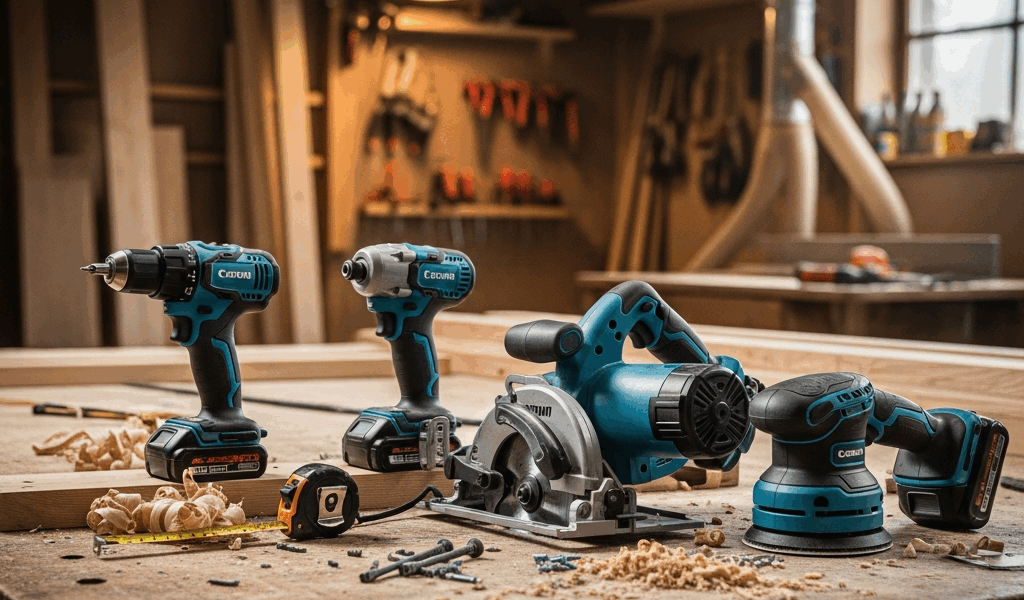
Walk into any woodworking forum and ask which power tool brand is best. Then grab some popcorn, because you just started a war. Milwaukee guys swear by the red. Festool owners will explain why they’re worth three times the price. SawStop fans say nothing else matters once you’ve seen a brake fire.
They’re all right about some things. Here’s how the big names in woodworking power tools actually compare when you look at what matters for shop work — not just marketing.
Milwaukee: The Cordless Powerhouse
Milwaukee’s M18 platform dominates cordless power tools, and for good reason. The battery ecosystem is enormous — over 200 tools on the same battery platform — and the performance rivals corded tools in most categories. For a woodworker, the M18 FUEL lineup covers drills, impact drivers, routers, circular saws, jigsaws, and sanders that are genuinely shop-capable.
Where Milwaukee shines: job site and workshop flexibility. No cords, no extension cords, no outlet limitations. The brushless motors are efficient and durable. Battery life on the high-output batteries is legitimate — a 12.0 Ah battery can run a circular saw through a full day of cuts.
Where Milwaukee falls short for woodworking: dust collection is an afterthought on most tools. The brand’s DNA is construction and trades, not fine woodworking. You won’t find the precision adjustments and dust extraction systems that European brands build into every tool.
Festool: Precision With a Price Tag
Festool is the brand that woodworkers either worship or refuse to discuss because of the prices. A Festool track saw costs more than most people’s entire cordless tool kit. But there’s substance behind the premium.
The Festool system is designed around dust extraction and precision. Every tool connects to their CT dust extractors. The Systainer storage system keeps everything organized and portable. The track saw, domino joiner, and sanders are best-in-class tools that produce measurably better results than their competitors in controlled comparisons.
The Domino joiner deserves special mention — it’s a tool category that Festool essentially created. Nothing else on the market does what the Domino does for joinery work. If you build furniture or cabinets professionally, the Domino alone can justify entering the Festool ecosystem.
The downside: cost. A fully equipped Festool workshop costs three to five times what a comparable Milwaukee or DeWalt setup runs. The value proposition only makes sense if your woodworking generates income or if precision and dust management are your top priorities.
SawStop: The Safety Standard
SawStop makes table saws with flesh-detection technology that stops the blade within milliseconds of contact with skin. The blade drops below the table and a brake cartridge destroys itself to stop the spin. You lose a $100 cartridge and maybe get a small nick instead of losing fingers. Every woodworker who has seen the demonstration video remembers it.
Beyond the safety system, SawStop table saws are excellent tools on their own merits. The Professional Cabinet Saw is built to compete with Powermatic and Grizzly at similar price points, with fit, finish, and fence quality that match or exceed the competition. The Jobsite Saw brought the safety technology to a portable format.
The limitation: SawStop only makes table saws. If you’re comparing overall tool ecosystems, they’re not in the conversation. But if you’re buying a table saw — especially for a shop where other people (kids, students, employees) might use it — SawStop is hard to argue against. The safety feature alone changes the risk calculation.
Which Brand Wins?
There’s no single answer, because these brands serve different needs:
Milwaukee wins for the woodworker who wants a versatile cordless ecosystem at a reasonable price point. Best for shops that blend woodworking with general construction and home improvement.
Festool wins for the serious furniture maker or cabinet shop where precision, dust collection, and finish quality justify the investment. Best for dedicated woodworkers who’ve moved past the hobby stage.
SawStop wins the table saw category outright for anyone who values their fingers. If you’re buying one table saw for your shop, make it a SawStop and build the rest of your tool collection around whatever ecosystem fits your budget.
Most well-equipped shops end up mixing brands anyway. A SawStop table saw, Milwaukee cordless tools, and a Festool sander isn’t a contradiction — it’s a woodworker who bought the best tool for each job regardless of the logo.



Stay in the loop
Get the latest the home woodshop updates delivered to your inbox.