Turning Dead Money Into Working Capital
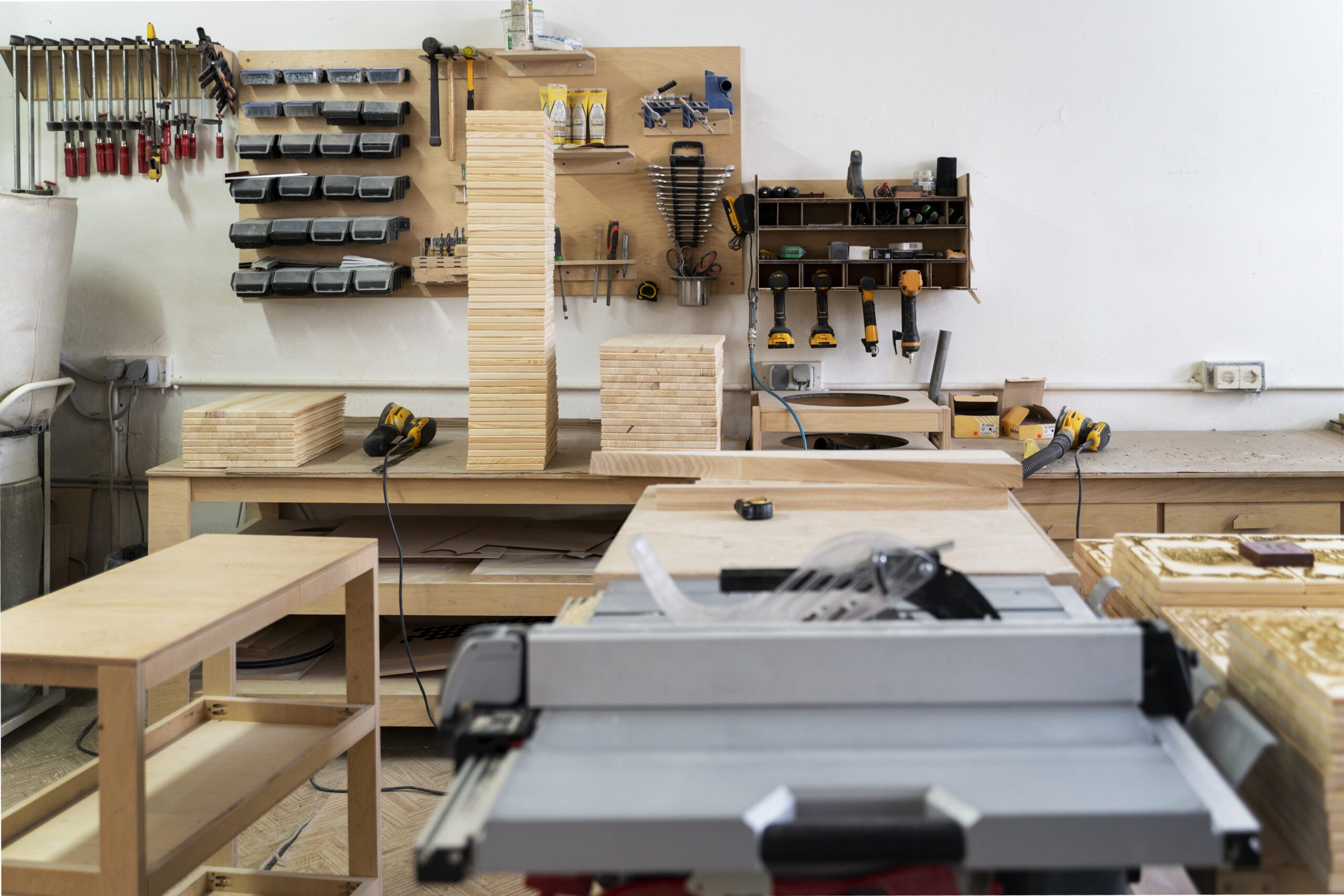
Walk through your shop right now. Look at the racks of lumber, the stacks of sheet goods, the drawers of hardware. Now estimate the value of everything you see. For many custom woodworkers, the number lands somewhere between $30,000 and $80,000. Some shops have over $100,000 in materials sitting on shelves.
That inventory is essential—you can’t make furniture without wood. But every dollar in inventory is a dollar not earning interest, not paying down debt, not available for equipment upgrades. Understanding how to balance “enough” with “too much” is fundamental to running a profitable woodworking business.
The Real Cost of Inventory
Holding inventory carries costs beyond the purchase price:
Opportunity cost: $50,000 in lumber at 7% return (current high-yield savings rate) means $3,500/year you’re not earning.
Storage space: That lumber rack takes shop space. At $10-$20/sq ft annual rent, 200 sq ft of storage costs $2,000-$4,000/year.
Insurance: Your property coverage includes inventory value. Higher inventory means higher premiums.
Waste and loss: Wood warps, hardware becomes obsolete, finishes expire. Industry estimates suggest 2-5% annual loss from damage and obsolescence.
Handling: Time spent organizing, moving, and maintaining inventory is time not spent on billable work.
Total carrying cost: typically 15-25% of inventory value annually.
On a $50,000 inventory, that’s $7,500-$12,500/year in hidden costs.
Calculating Your Current Inventory Position
Step 1: Take a Physical Count
Go through your shop systematically:
- Hardwoods: Species, thickness, approximate board feet
- Sheet goods: Plywood, MDF, melamine by type and thickness
- Hardware: Hinges, slides, knobs, pulls
- Finishes: Stains, lacquers, oils, brushes
- Fasteners: Screws, nails, dowels, biscuits
- Abrasives: Sandpaper, pads, discs
- Specialty items: Veneer, inlay materials, specialty woods
Step 2: Assign Values
Use replacement cost—what you’d pay to buy these materials today. For lumber you’ve had for years, use current market prices, not what you originally paid.
Step 3: Calculate Inventory Turnover
Inventory turnover = Annual cost of goods sold ÷ Average inventory value
Example: If your annual material costs are $40,000 and your average inventory is $50,000, your turnover ratio is 0.8.
Healthy turnover for custom woodworking: 2-4 times per year. Lower than 2 suggests too much inventory; higher than 4 might mean you’re running too lean and risking stockouts.
Why Woodworkers Over-Inventory
Understanding the psychology helps you address the problem:
“I might need it someday”: That exotic wood you bought at a lumber show five years ago. If you haven’t used it yet, you probably won’t.
“It was a great deal”: Buying $2,000 of walnut when you need $500 isn’t a deal—it’s $1,500 tied up until you find projects for it.
“I don’t want to run out”: Fear of not having the right material for a project drives over-purchasing. But holding six months of inventory to avoid one trip to the lumber yard is expensive insurance.
“I’m building my collection”: Woodworkers are often collectors by nature. Collecting wood feels productive when it’s actually consuming capital.
Right-Sizing Your Inventory
A: Core Stock Approach
Maintain inventory for your most common projects:
- 2-3 months supply of your standard species (walnut, cherry, maple, oak)
- Common sheet goods in standard thicknesses
- Frequently used hardware in moderate quantities
- Standard finishes you use on most projects
B: Project-Specific Purchasing
For specialty items, buy per-project:
- Exotic woods
- Specialty hardware (unusual hinges, pulls, mechanisms)
- Custom veneers
- Materials for unusual finishes
C: Safety Stock Calculation
For each material, determine:
- Average lead time from supplier
- How long you can wait in an emergency
- Typical project consumption rate
Safety stock = (Maximum lead time – Average lead time) × Average daily usage
Inventory Reduction Strategies
Sell Off Dead Stock
That exotic lumber you’re “saving for the right project”? List it on local woodworking forums, Craigslist, or Facebook Marketplace. Some recovery is better than continued carrying costs.
Use It or Lose It Projects
Design speculative pieces around materials you have excess of. A set of cutting boards from that stack of curly maple turns dead inventory into saleable goods.
Return/Exchange
Some suppliers accept returns on unused hardware and materials. Check your vendor policies.
Improve Purchasing Discipline
Before any purchase, ask:
- Do I have a specific project for this?
- Will I use it within 90 days?
- Is this replacing depleted stock or adding to excess?
Building Supplier Relationships for Lower Inventory
Strong supplier relationships reduce the need for safety stock:
- Reliable lead times: If your lumber supplier consistently delivers within 3-5 days, you need less inventory buffer.
- Will-call accounts: Some suppliers let you reserve materials until you need them.
- Small-quantity pricing: Negotiate better pricing on smaller orders rather than bulk discounts that encourage over-buying.
- Consignment options: Some hardware suppliers offer consignment where you don’t pay until you use.
Tracking Systems That Work
Simple Spreadsheet
Columns: Item, Location, Quantity, Unit Cost, Total Value, Last Used Date, Minimum Stock Level
Update weekly or when you purchase/use materials.
Bin System
Two-bin system for consumables: when the first bin empties, reorder and start using the second bin.
Project Allocation
When you start a project, allocate materials in your tracking system. This prevents counting the same wood as available for multiple projects.
Material Costing Accuracy
Proper inventory tracking enables accurate job costing:
- Record materials used per project
- Track waste percentage (typically 15-25% for hardwood)
- Include small consumables (sandpaper, finishes, fasteners)
- Compare estimated vs. actual material costs
This data helps you price future projects more accurately and identify where material waste is occurring.
Cash Flow Impact
Consider inventory’s effect on cash flow:
Scenario 1: Buying $10,000 of lumber because you expect three projects next month. Those projects get delayed. You’ve tied up $10,000 for 90 days that could have stayed liquid.
Scenario 2: Buying $3,500 for confirmed projects, with $6,500 remaining available for unexpected expenses or opportunities.
For custom woodworkers, cash flexibility often matters more than bulk pricing savings.
Annual Inventory Review
Once a year, do a comprehensive review:
- Physical count of all inventory
- Identification of dead stock (nothing used in 12+ months)
- Market value assessment for aged materials
- Disposal plan for obsolete or damaged items
- Adjustment of minimum stock levels based on actual usage
This review often reveals thousands of dollars in inventory you forgot you had—or had mentally committed to projects that never happened.
The Bottom Line
Your inventory exists to serve your projects, not the other way around. Every dollar beyond what you actually need for near-term work is a dollar not working for your business.
Start with a physical count this week. Calculate your turnover ratio. Identify the dead stock. Develop a plan to right-size your inventory over the next 6-12 months.
That $50,000 in wood sitting in your shop? Getting it down to $35,000 of productive inventory frees up $15,000 in capital—enough for a new dust collector, six months of rent, or a cushion for slow periods. That’s real money that can transform your business.


Stay in the loop
Get the latest the home woodshop updates delivered to your inbox.